Power and Horses (1) – Together, Even After Death
Through their encounter with horses, humans have gained entirely new possibilities.
And in the ancient world, how horses were used could shape the very fate of a country—
sometimes as warhorses charging across the battlefield,
sometimes as emblems of sovereign authority.
In this and the next episode, we explore this theme of “power and horses.”
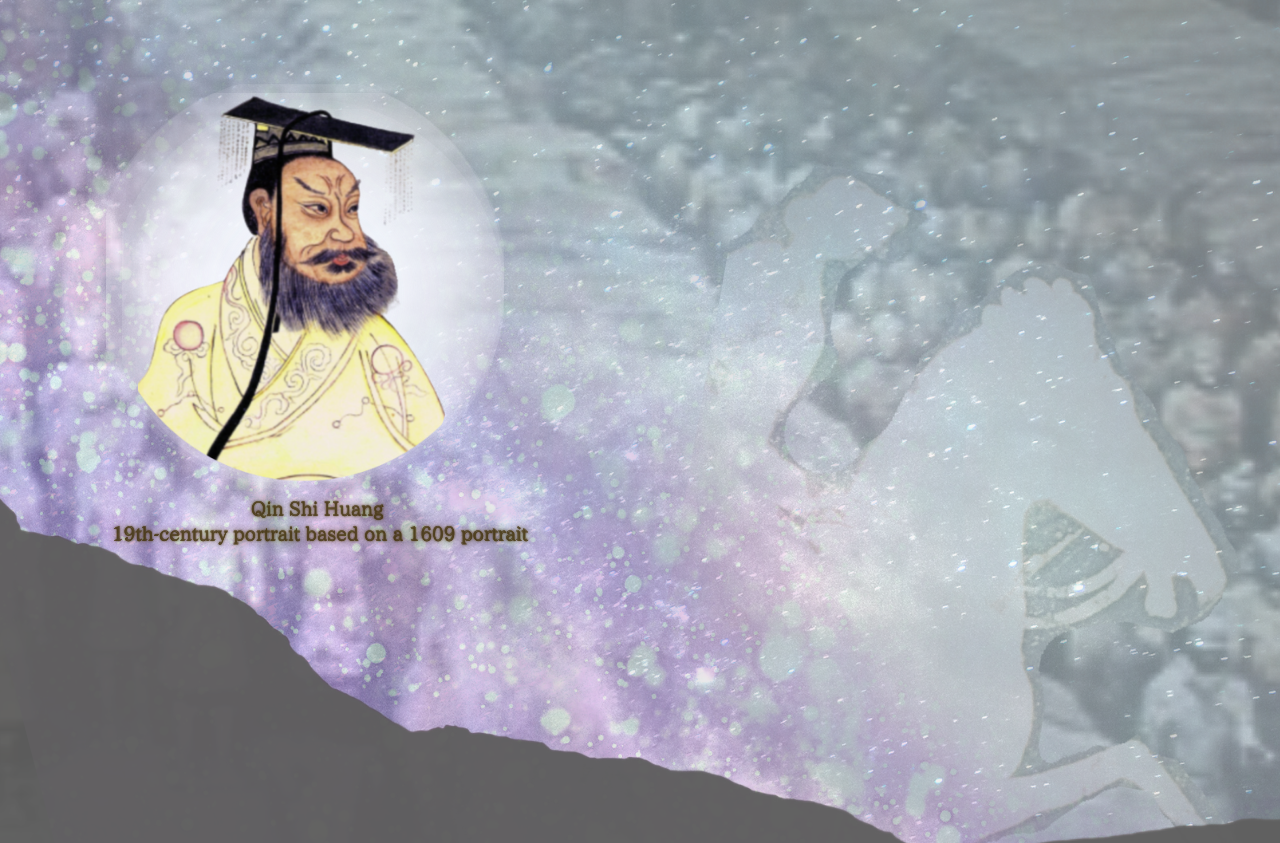
Our first stop is Qin Shi Huang (259–210 BCE), first emperor of a unified China.
In ancient China, the afterlife was imagined as a continuation of this world.
It is said that Qin Shi Huang, wishing his mighty power to endure even after death,
had an enormous mausoleum and vast numbers of yong (burial figures) constructed under his direct command.
One part of this complex is what we now call the “Terracotta Army Pits.”
Each soldier has a different face and clothing, and it is said they faithfully reproduce real individuals.
By contrast, the warhorses, drawn up in ranks according to their roles,
share almost exactly the same build and pose within each group.
What stands out is not individuality but uniformity.
This strongly suggests that the standards for selecting warhorses were extraordinarily strict.
Qin had once been no more than a small tribe skilled in horse breeding.
Building on their advanced expertise in training and managing warhorses,
they strengthened their power and ultimately forged the empire that became the first unified China.
As if standing guard around the First Emperor,
nearly eight thousand soldiers and several hundred warhorses face east in perfectly ordered battle formations.
For an emperor who rose to the summit of history together with his horses,
these ranks can almost feel like a quiet suggestion that—even in the world after death—
he wished to be surrounded by elite warhorses and an unwavering military order.
That is simply the impression they give me.
Looking at the horses of the Terracotta Army, what do they seem to tell you?
I would be delighted if you would enjoy the full story through the video itself.
Images: Created based on public domain works